LAYERED LANDS
The Beginning or The End

Dedicatoria Chicana. Francisco X. Alarcón
Eduardo Carrillo
Felicia Rice
Adrienne Rich, 1989
(Los Angeles Public Library)
This broadside is a collaboration between Francisco X. Alarcón, Adrienne Rich, and the artist Ed Carrillo, set and printed by book artist and founder of Moving Arts Press, Felicia Rice. Alarcón (1954-2016) was a celebrated Chicano poet whose works explored themes of cultural identity, immigration, and the experiences of Mexican Americans in the US. Rich (1929-2012) was a groundbreaking feminist poet whose writing investigates themes of gender, social justice, and identity. Carrillo (1937-1997) was a Chicano artist whose work engages the breadth of Mexican American life.
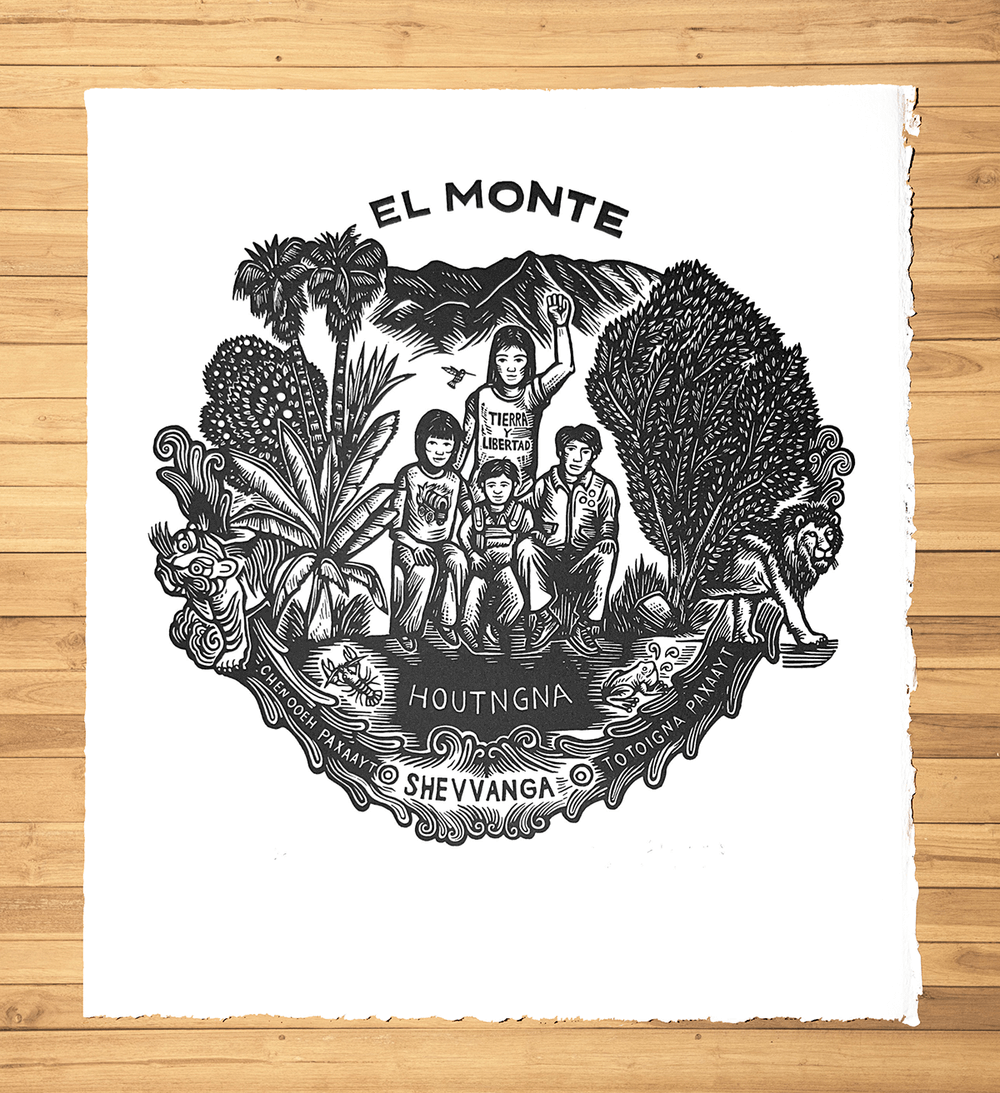
People's Seal of El Monte. Daniel Gonzáles
2022 (Los Angeles Public Library)
The viewer's eye is drawn immediately to the people at the center of Daniel González's seal. Notably, there is just one, lone figure in the City of El Monte's official seal. And while that seal features English, González's features Tongva, Los Angeles' first language, and Spanish, the language currently spoken by the majority of El Monte residents. "Tierra y Libertad" means "land and fredom" in Spanish. "Houtngna" was a Tongva village in the El Monte area; "Shevaanga" was a village in what is now San Gabriel. "Paxaayt" is Tongva for "river," and the words at the bottom of González's seal refer to the Rio Hondo and San Gabriel rivers that border El Monte.
Why do you think González privileges community over individual and Tongva over English in his image? What other differences can you see between these two seals? What similarities? Notice, for example, the t-shirt the boy on the left is wearing. It features a wagon angled exactly as the wagon on El Monte's official seal. Why do you think the wagon on the boy's t-shirt appears to be on fire?
The People's Seal of El Monte is a collaboration between community members, Tongva elders, González and the South El Monte Arts Posse (SEMAP).
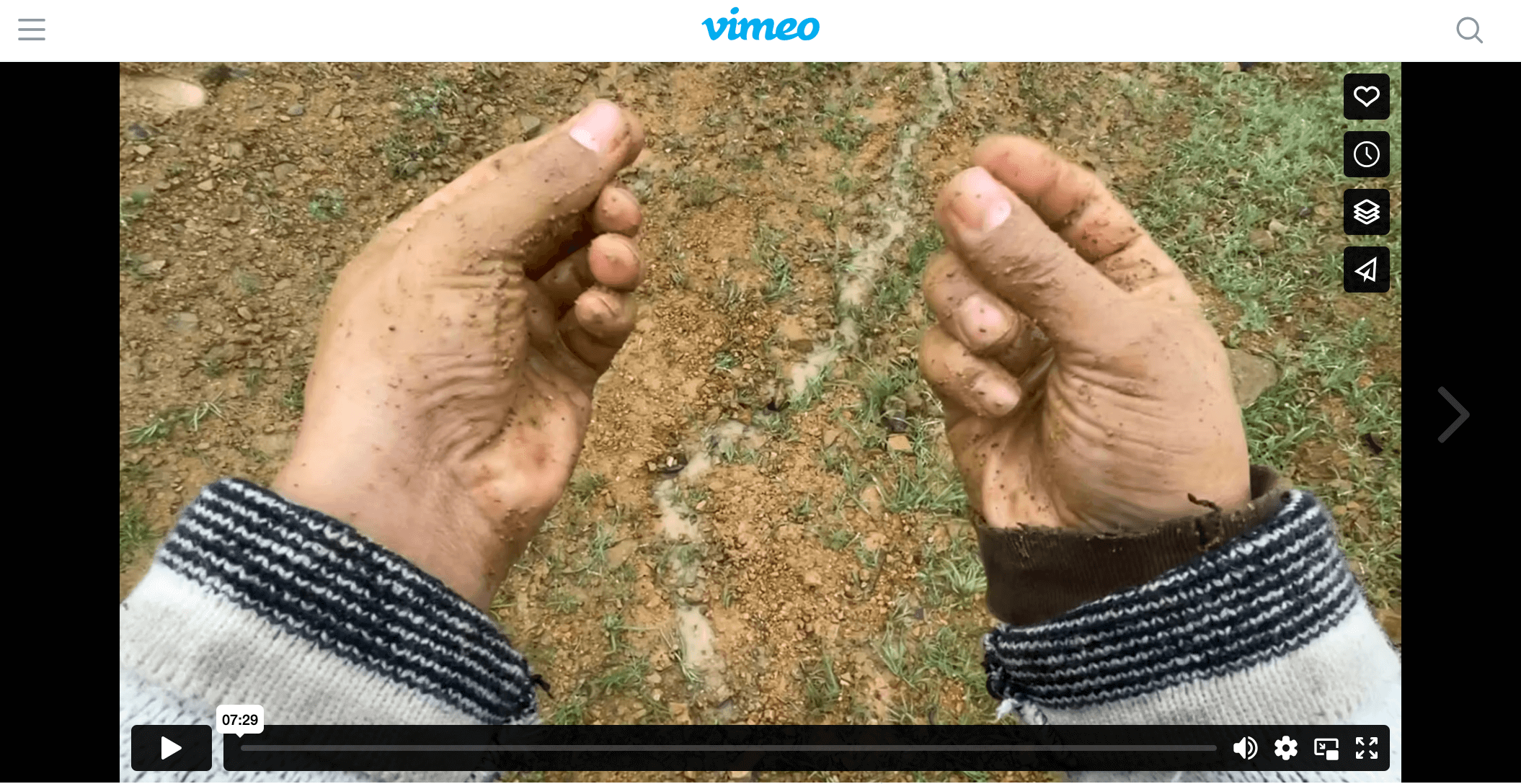
Ooxono (From Here)
Isaac Michael Ybarra (Tongva, Chumash, Chicano)
2022 Watch Ybarra's video here https://vimeo.com/848877883 (Courtesy of the artist)
Ybarra's film resists how First Peoples are erased from the land when the term Urban Native is used in the context of Tovaangar (Los Angeles). Images of decolonial, cultural and natural preservation are juxtaposed with those of invasive, urban infrastructure. These play against a soundtrack blending Ybarra's poem "Ooxono (From Here)" with sounds from Los Angeles' natural and historical landscape.
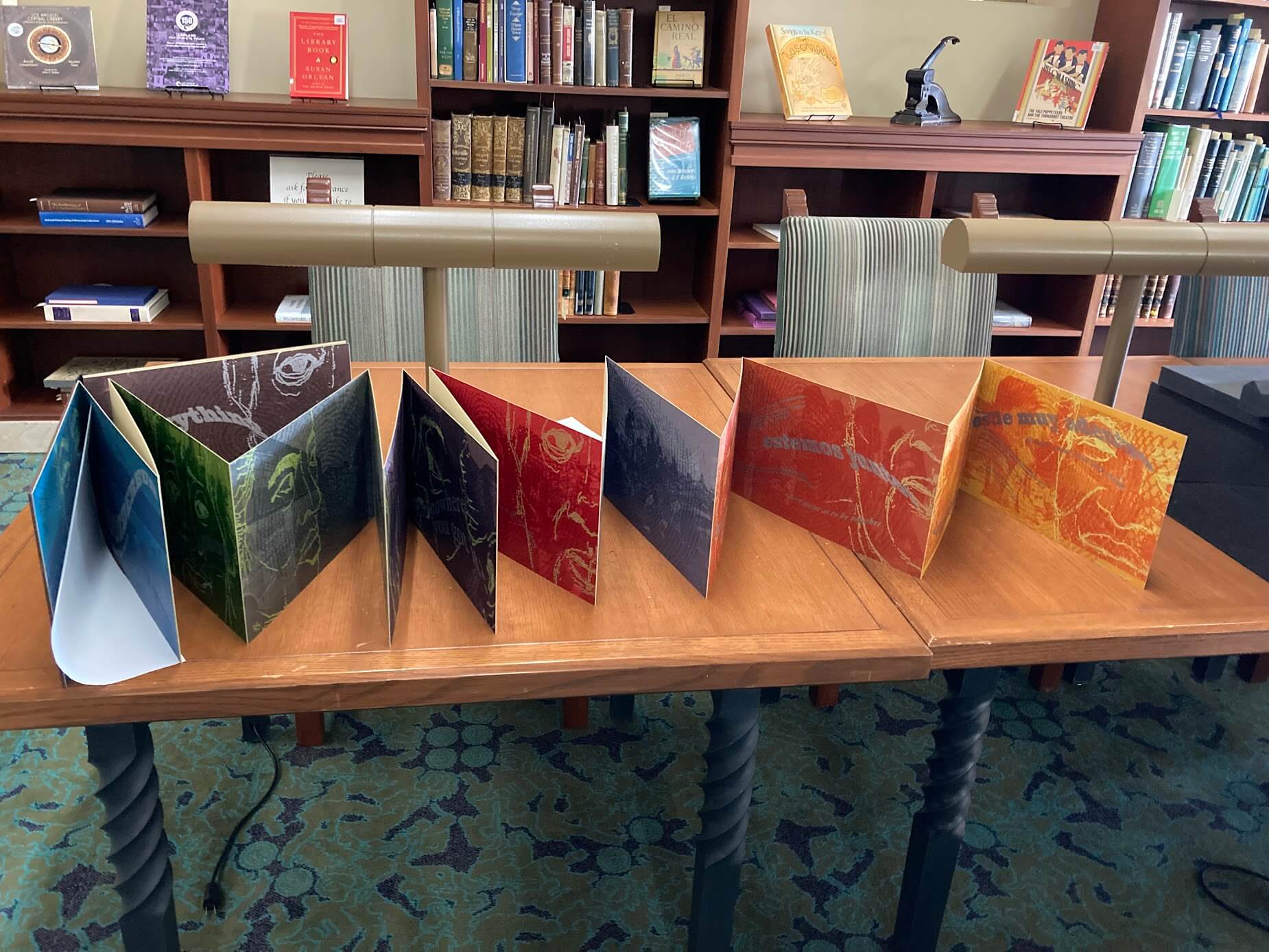
Borderbus
Juan Felipe Herrera, images by Felicia Rice 2019 (Los Angeles Public Library)
"Borderbus" first appeared in Notes on the Assemblage (2015), a poetry collection by former National Poet Laureate Juan Felipe Herrera. It captures the voices of two detained women navigating the US-Mexico border while being transported on an Immigration and Customs Enforcement (ICE) bus. This artist's book puts the poem in dialogue with vivid, abstract prints by Felicia Rice. The combination of image and text emphasizes how women's humanity triumphs over the illusory, fleeting borders that seem so permanent but which history proves are transient.
No somos nada y venimos de la nada
pero esa nada lo es todo si la nutres de amor
por eso venceremos
______________________
We are nothing and we come from nothing
but that nothing is everything, if you feed it with love
that is why we will triumph
We are everything hermana
Because we come from everything