LAYERED LANDS
California: Mexican Frontier
After Mexico won independence from Spain, California became part of Mexico, and 1821-1846 were years of significant changes in the region. Missions became things of the past replaced by ranchos – extensive land grants for farming and raising animals, driven largely by indigenous labor. Mexico struggled to manage California due to its vast size and sparse population.
The situation worsened in 1824 when Mexico's new constitution kept California as a protected territory, not a state. This decision upset the elite Mexican Californians, called californios, and opened the door for British, French, and US settlers to establish themselves economically and politically. California became a frontier with tension and change brewing, shaping its future dramatically.
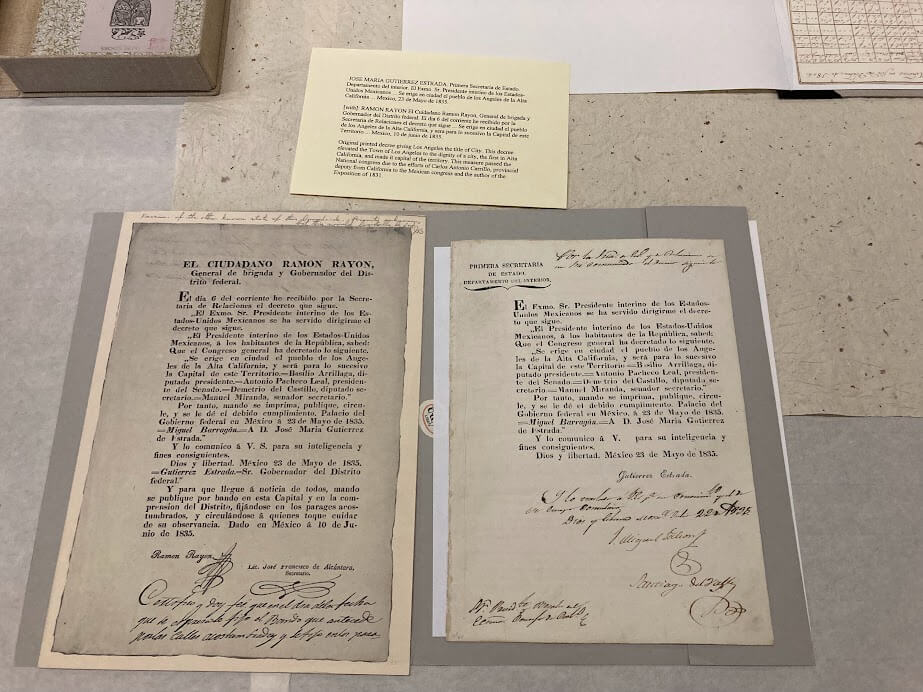
Los Angeles is elevated from town to city. José María Gutierrez Estrada, May 23, 1835
unknown photographer 1875 (Los Angeles Public Library, Legacy Collection)
Abel Stearns built this house, "El Palacio," at what is now the intersection of North Main and East Arcadia Streets, in Los Angeles in 1838. He lived here with his wife, Arcadia, after they were married in 1841. The couple hosted many parties at 'El Palacio" entertaining the elite of nineteenth century Mexican Los Angeles.
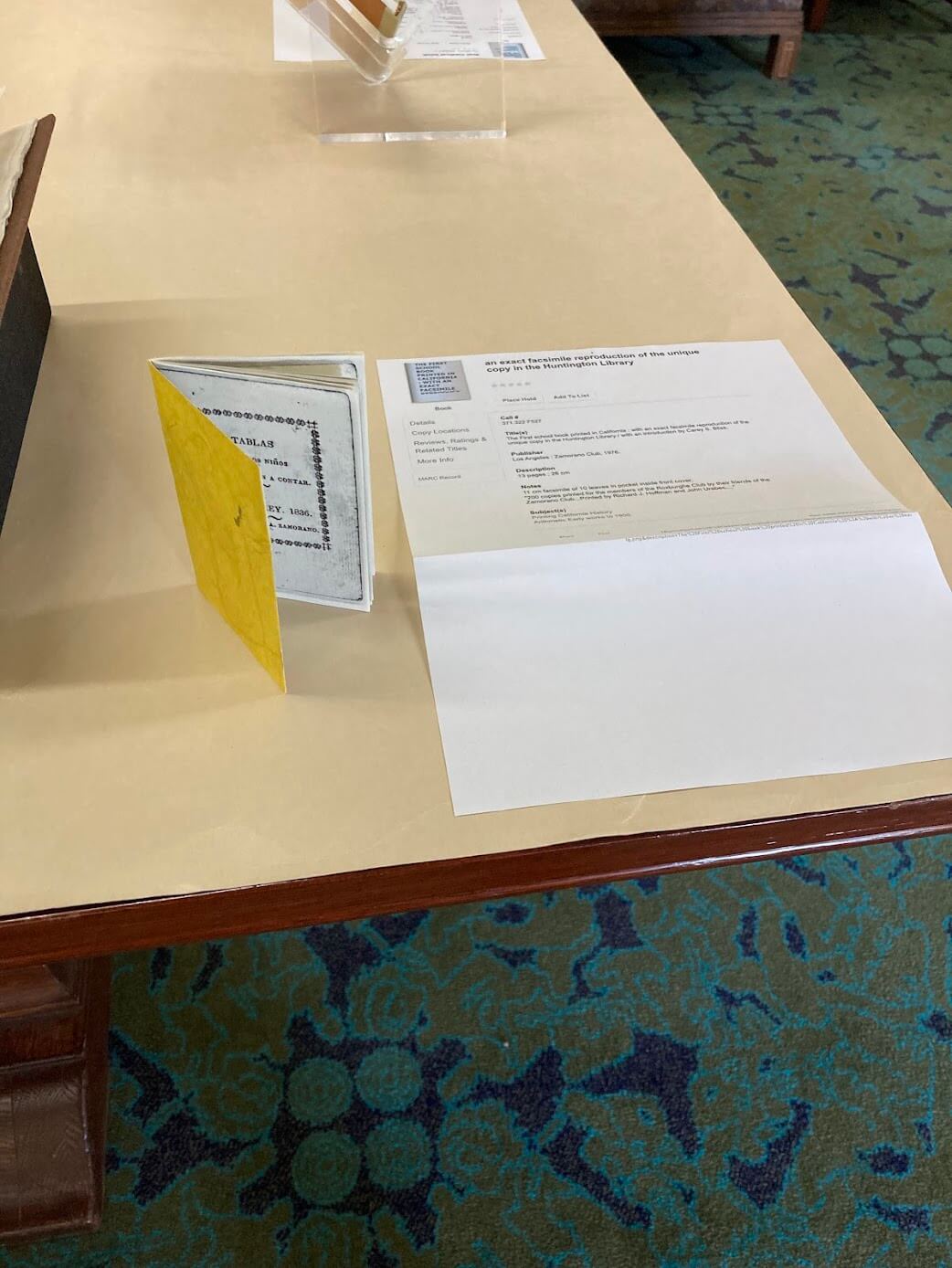
Tabla Para Los Niños Que Empiezan a Contar. José Mariano Romero, 1836 [1976]
(Los Angeles Public Library)
This is a replica of the first schoolbook published in California. It includes multiplication tables as well as weight, money, distance, and time conversions. This book is evidence that children were learning and studying well before 1848 when the first public school opened in California.
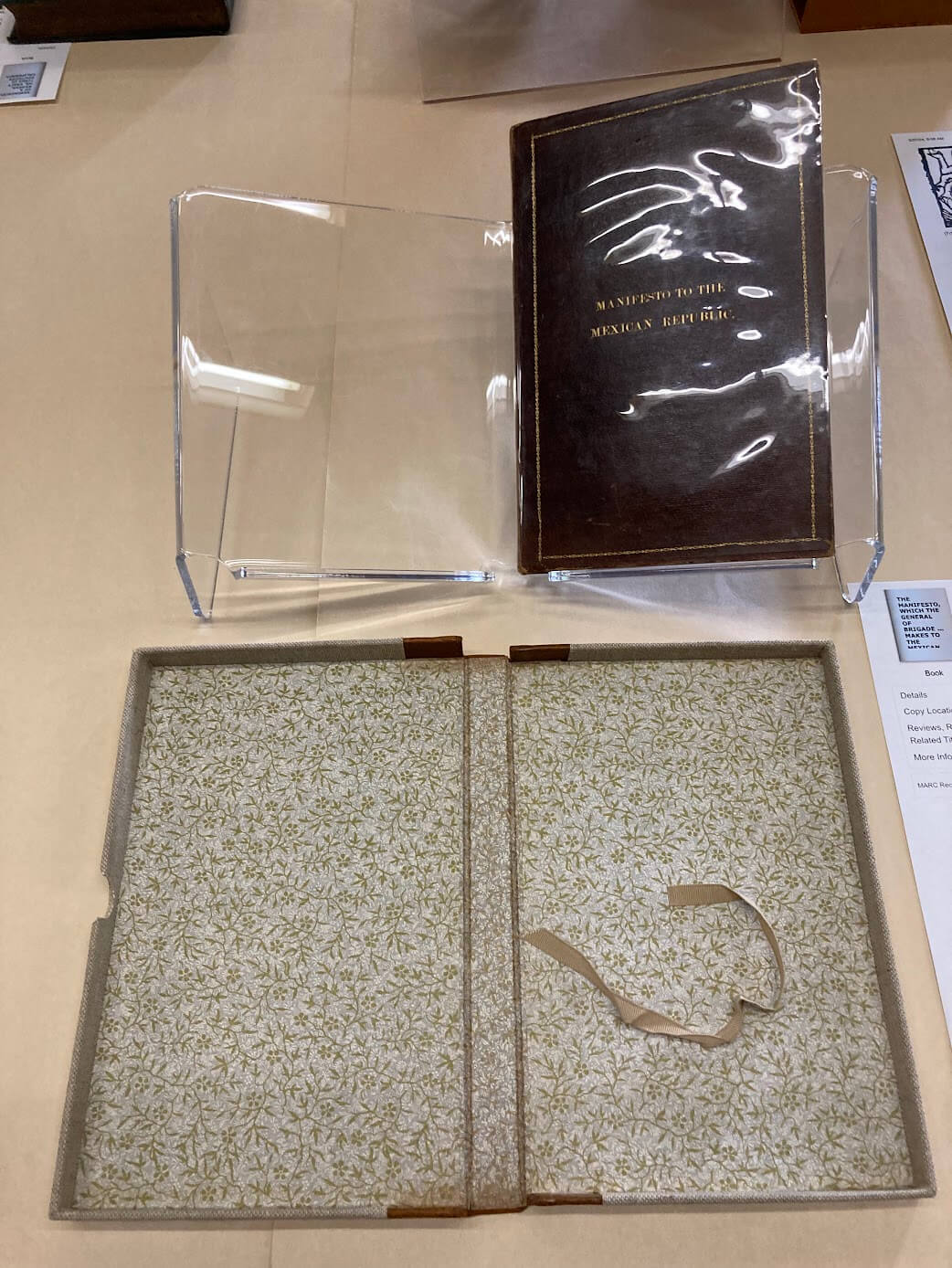
Manifesto to the Mexican Republic. José Figueroa, 1855
(Los Angeles Public Library)
This is the first edition of the English translation of Governor Figueroa's Manifesto. Originally published in 1835 in Spanish by Augustín Zamorano, who brought the first printing press the state, this was the first book published in California. The Manifesto is a defense of Figueroa's refusal to turn mission property over to José María de Híjar and José María Padrés who had been sent by President Valentín Gómez Farias. Figueroa was opposed to the Híjar-Padres plan because he believed that at least half of the mission lands should be turned over to the California natives. This was a controversial idea, and in March of 1835 a small group of the Híjar-Padrés colonists launched a brief, unsuccessful rebellion against Figueroa in Los Angeles.
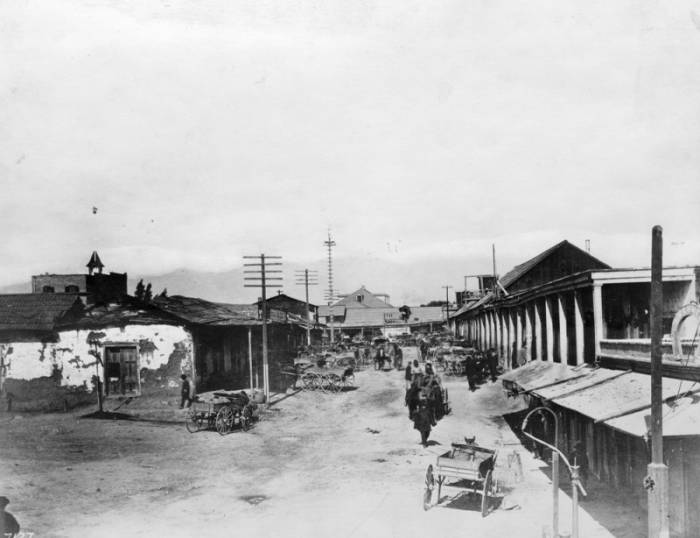
Looking toward La Plaza along "Calle de los Negros". unknown photographer, ca 1882
(Los Angeles Public Library Legacy Collection)
In the nineteenth century, "Calle de los Negros," now the stretch of Los Angeles St. north of Arcadia, was home to saloons, casinos, and brothels. It was also the site of one of Los Angeles' worst race riots, the Chinese Massacre of 1871.
Horace Bell on Calle de Los Negros
Calle de los Negros was the most perfect and full-blown pandemonium … ever beheld. There were four or five gambling places and the crowd … was so dense that we could scarcely squeeze through. Americans, Spaniards, Indians and foreigners, rushing and crowding along from one gambling house to another … Every few minutes a rush would be made, and maybe a pistol shot would be heard, and when the confusion … would have somewhat subsided … you would learn that it was only a knife fight … or a gambler had caught somebody cheating and had perforated him with a bullet. Such things were a matter of course, and no complaint or arrests were ever made. In the years of 1851 to 52, and 53, there were more desperadoes in Los Angeles than any place on the Pacific coast … Knives and revolvers settled all differences.
Horace Bell, Reminiscences of a Ranger
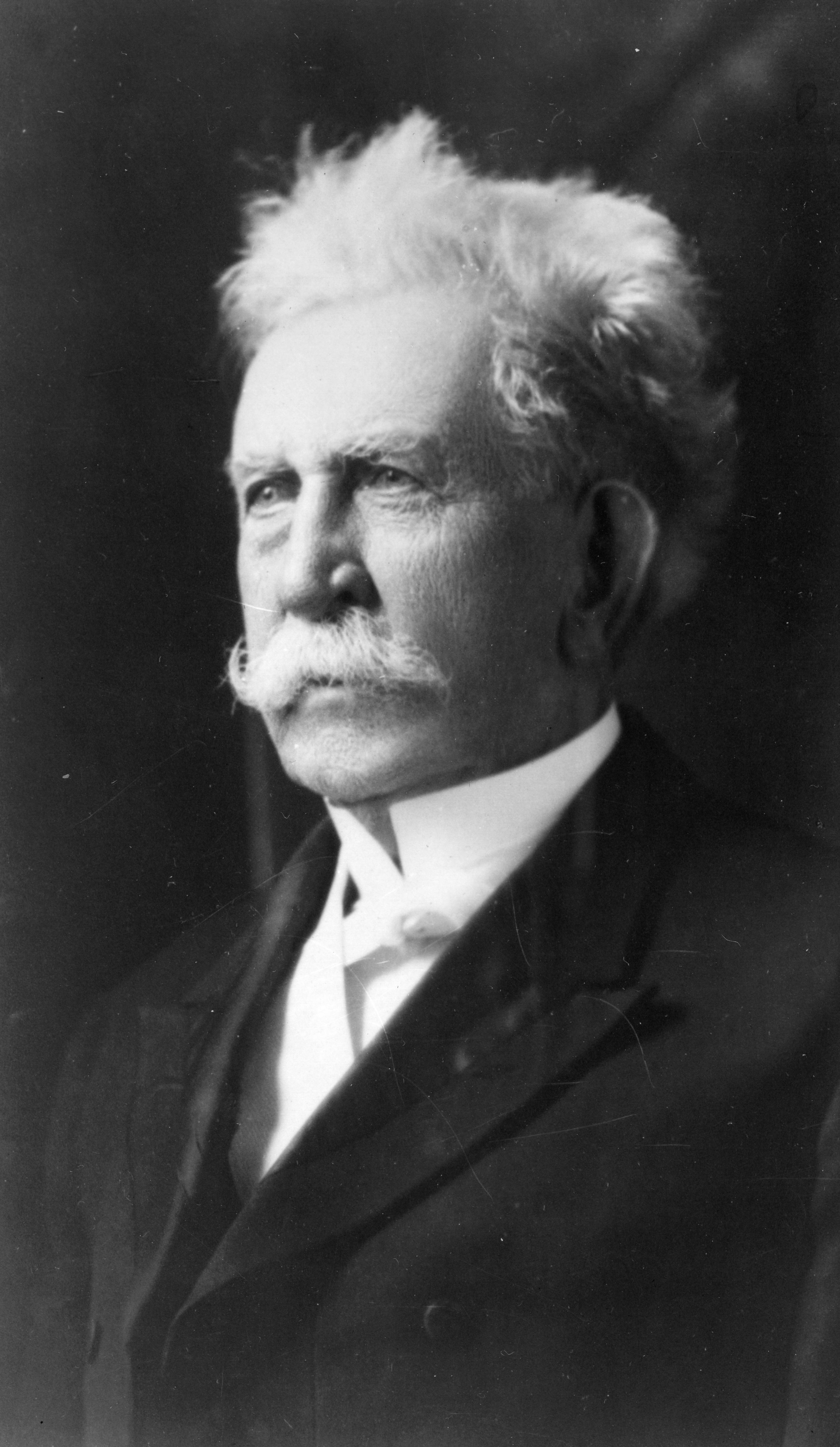
Horace Bell. unknown photographer, n.d.
(Los Angeles Public Library, Security Pacific National Bank Collection)
Horace Bell (1830-1918) was a Los Angeles Ranger (precursor to the Sheriff's department), a mercenary, a soldier, a lawyer, a journalist, and a newspaper publisher. Born in New York City, Bell came to Los Angeles during the Gold Rush seeking opportunities and adventure. Known for his keen observations and sharp wit, Bell penned Reminiscences of a Ranger (1881), providing vivid, if somewhat exaggerated, accounts of the region's lawlessness.
Bella Union Hotel. unknown photographer, 1876
(Los Angeles Public Library, Security Pacific National Bank Collection)
The Bella Union Hotel, located on Main St. between Temple and Aliso, was one of the most important places in 19th century Los Angeles. As governor, Pio Pico moved the territory's capital from Monterey to Los Angeles and set up his headquarters in the building that would eventually house the hotel. That building became the headquarters of Lieutenant Archibald Gillespie after the US conquered California in 1847. By early 1850, the building was operating as the Bella Union, and on June 24 of that year, it became the county's first courthouse. The Bella Union was also home to The Los Angeles Star, Southern California's first newspaper and the first Butterfield Overland Mail stage arrived there from St. Louis on October 7, 1858. In Reminiscences of a Ranger Horace Bell describes it thus, "The house was a one-story flat-roofed adobe, with a corral in the rear, extending to Los Angeles street, with the usual great Spanish portal, near which stood a little frame house, one room above and one below. The lower room had the sign "Imprenta" over the door fronting on Los Angeles street, which meant that the Star was published therein. The room upstairs was used as a dormitory for the printers and editors. . . . On the north side . . . were numerous pigeon-holes, or dog-kennels. These were the rooms for the guests of the Bella Union. In rainy weather the primitive earthen floor was sometimes, and generally, rendered quite muddy the percolations from the roof above. . . . The rooms were not over 6x9 [feet] in size. Such were the ordinary dormitories of the hotel advertised as being the 'best hotel south of San Francisco.' If a very aristocratic guest came along, a great sacrifice was made in his favor, and he was permitted to sleep on the little billiard table. [In the bar] during that time were the most bandit, cut-throat looking set [of people] that the writer had ever set his youthful eyes upon."
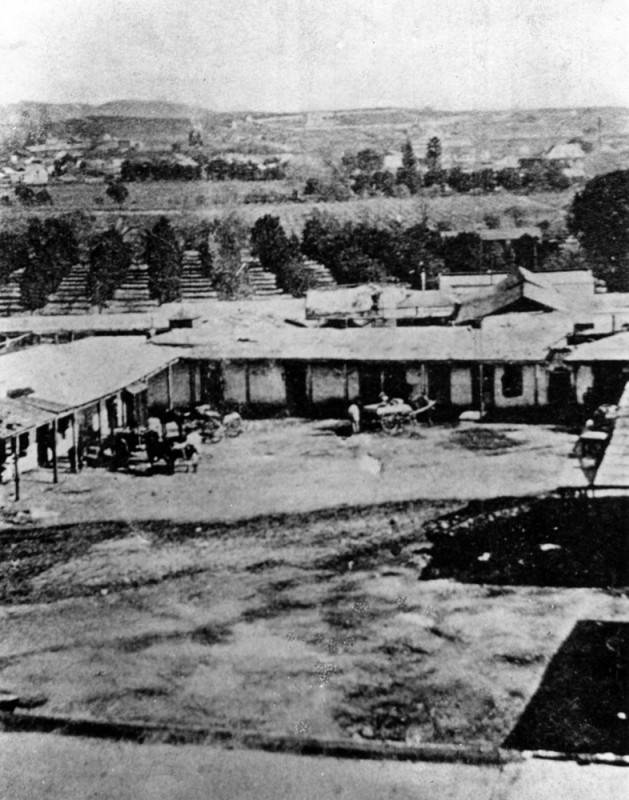
Abel Stearns Adobe and Orchard. unknown photographer, 1875
unknown photographer 1875 (Los Angeles Public Library, Legacy Collection)
Abel Stearns built this house, "El Palacio," at what is now the intersection of North Main and East Arcadia Streets, in Los Angeles in 1838. He lived here with his wife, Arcadia, after they were married in 1841. The couple hosted many parties at 'El Palacio" entertaining the elite of nineteenth century Mexican Los Angeles.
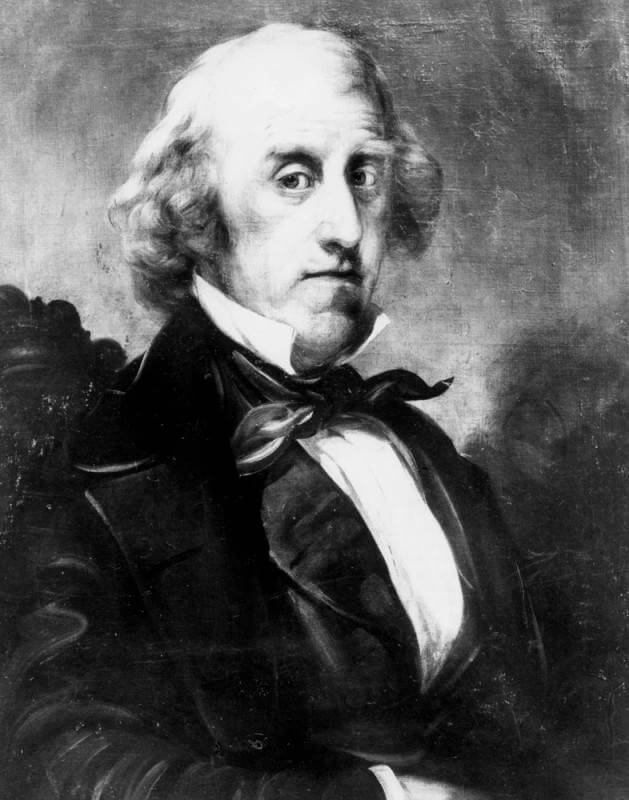
Abel Stearns. unknown artist, n.d.
(Los Angeles Public Library, Security Pacific National Bank Collection)
Abel Stearns (1798-1871) was born in Massachusetts to English immigrant parents. He left for Mexico in 1826, becoming a naturalized citizen before emigrating to Los Angeles in 1829, where he established himself as a major landowner, cattle rancher, and one of the area's wealthiest citizens.
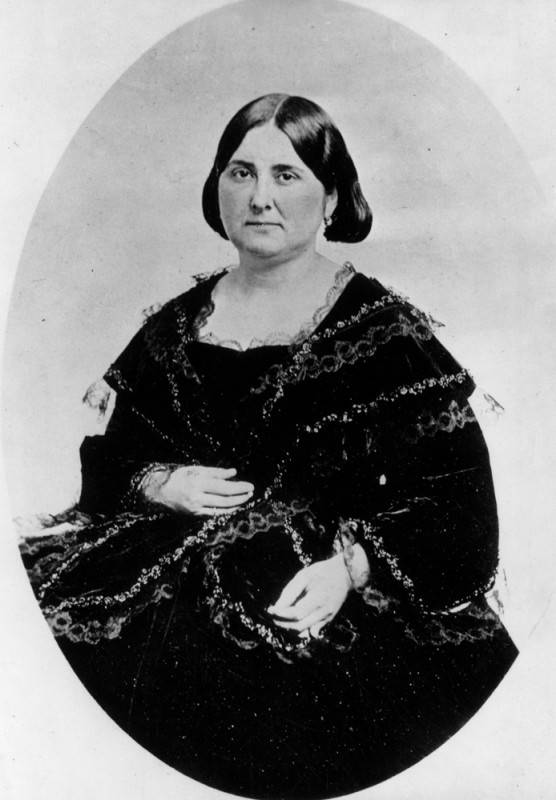
Arcadia Bandini Stearns de Baker. unknown photographer, n.d.
(Los Angeles Public Library, Security Pacific National Bank Collection)
Arcadia Bandini Stearns de Baker (1823-1912) was one of three famously beautiful sisters born into the powerful Bandini family of San Diego. As wealthy and powerful as her first husband, Abel Stearns, Arcadia remarried after Abel's death, amassing an even greater fortune, much of which she donated to help build the city of Santa Monica.
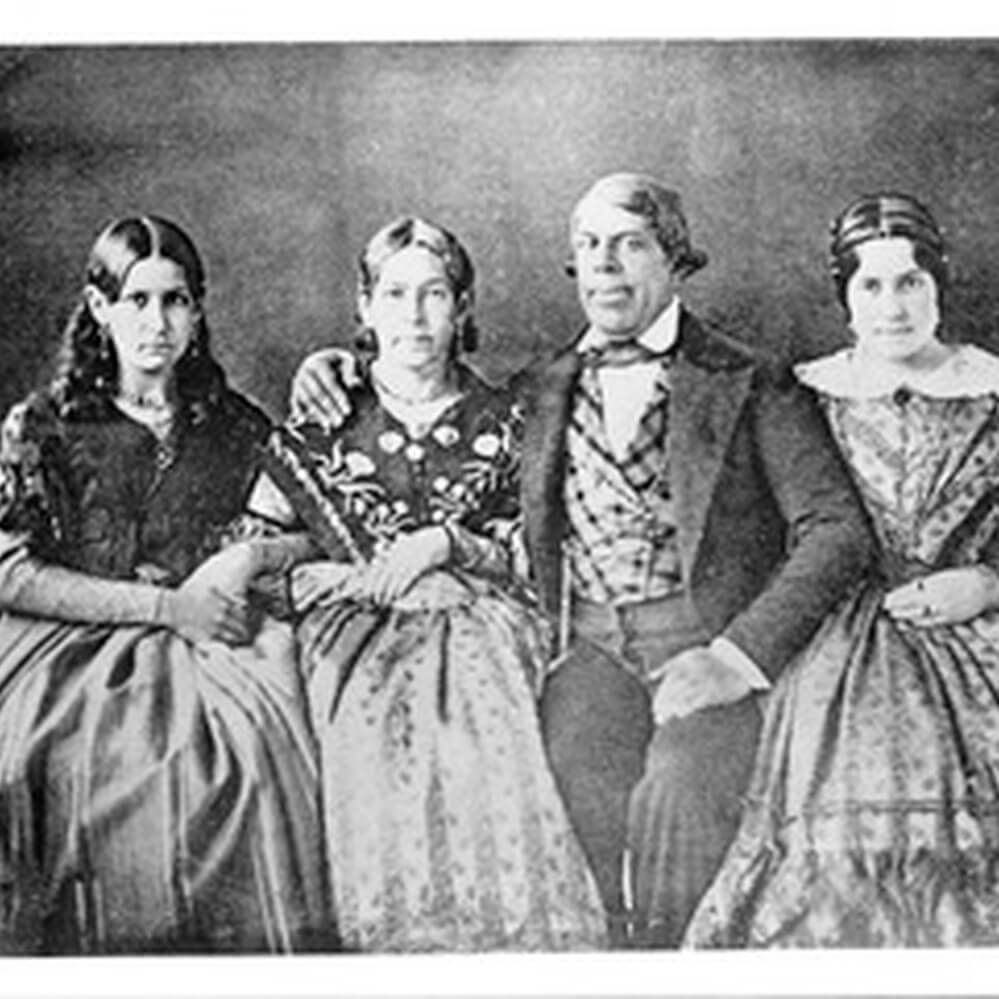
Governor Pio Pico with his wife and two nieces. unknown photographer, ca. 1885
Various Sources 1821-1848 (Miriam Matthews Photograph Collection, UCLA Library Special Collections, Charles E. Young Research Library)
Pío Pico (1801-1894) was born in San Diego and played a key role in the region's history acquiring vast land holdings and contributing to the development of California during its transition from Spanish to Mexican territory and then to US state. He was the last Mexican governor of Alta California and, according to historical records, had African and indigenous ancestry.
Antonio F. Coronel (1817–1894)
Politician and Performer
Like a lot of people living in Los Angeles today, Antonio Coronel was born in Mexico and came to California when he was a teenager in 1834. He worked a variety of jobs including teacher, justice of the peace, gold miner, and eventually politician. In addition to serving as California State Treasurer (1867-71), Coronel was mayor of Los Angeles (1853-4) and a member of the city council (1854-67), helping to establish the Department of Public Works. He was also an amateur historian. Antonio Coronel played a vital role in the preservation and celebration of California’s history, but that celebration, for him and others, often relied on idealized notions of a fantasy “Spanish” heritage that never was. Take a look, for example, at the clothes he is wearing in each of these pictures. How would you describe these outfits? In one, he’s dressed in a suit looking like any other late-19th century Angeleno. The picture of him and his wife Mariana, however, features the two of them in “Spanish” costume. They didn’t dress like that in their daily lives; nor did many other people, even in California’s Mexican period. Why do you think they're dressed like that in this picture? Who do you think took this picture, and why did they take it?
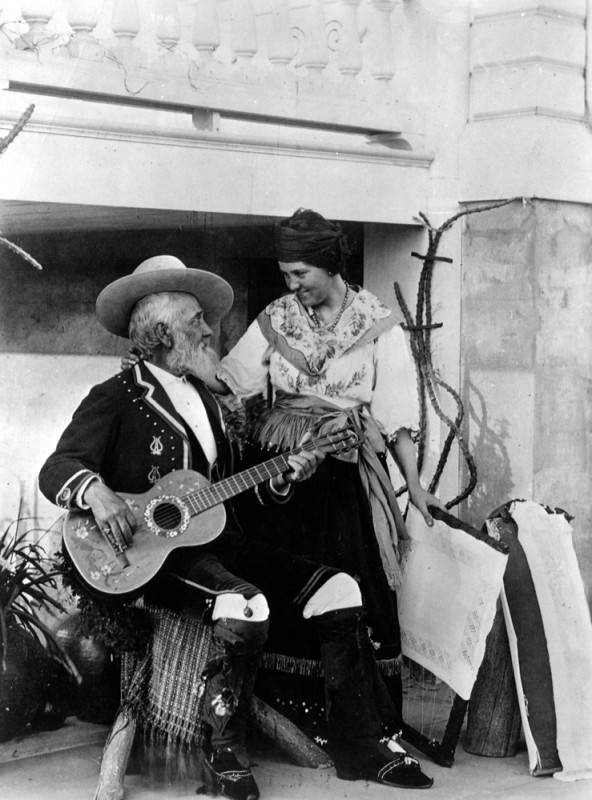
Mr. and Mrs. Antonio Coronel. unknown photographer, n.d.
(Los Angeles Public Library, Security Pacific National Bank Collection)
Antonio F. Coronel (1817–1894)
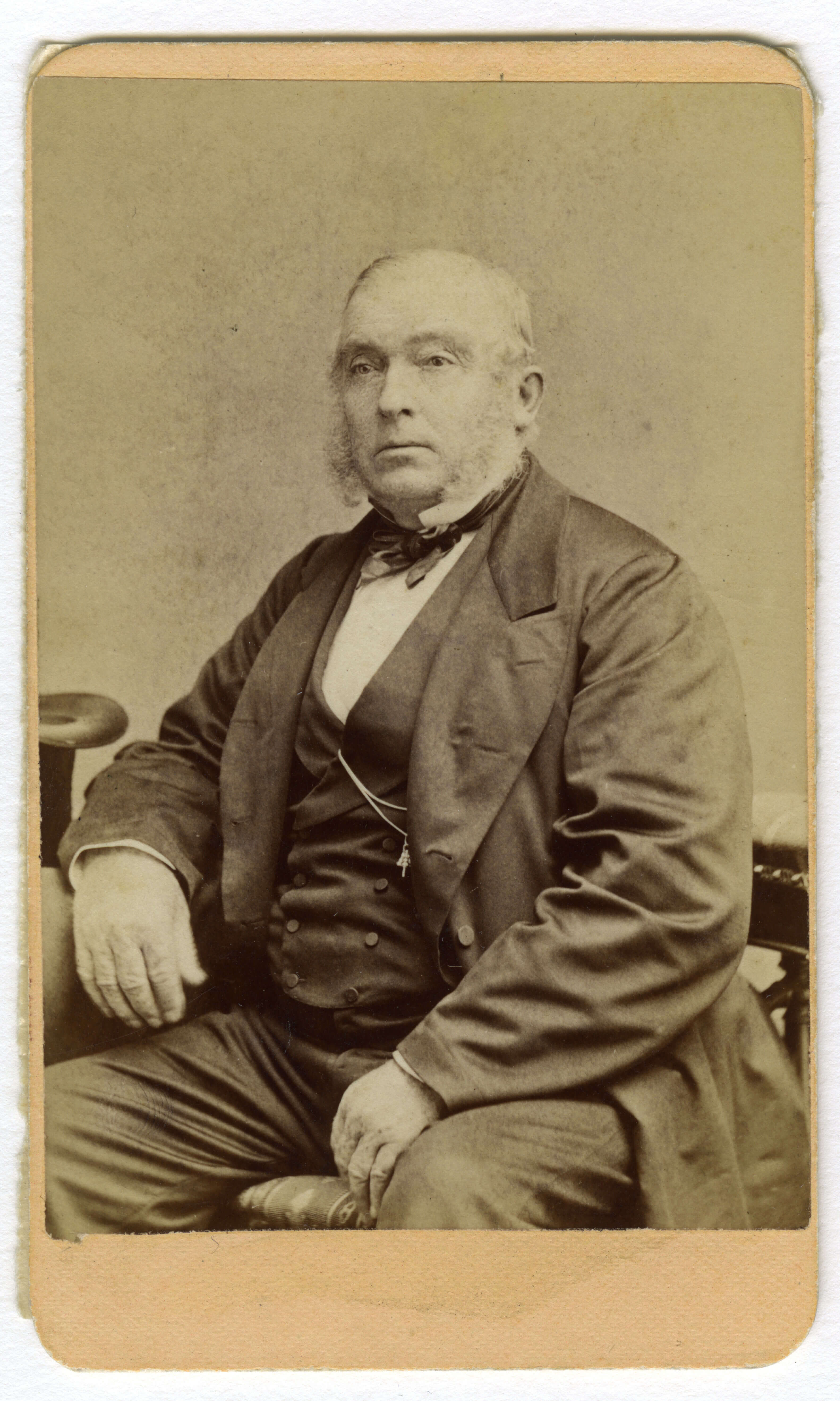
Jean Luis Vignes. unknown photographer, n.d.
(Ana Bégué de Packman Papers, UCLA Library Special Collections, Charles E. Young Research Library)
Jean-Louis Vignes (1782-1862), a French immigrant, was a wine-making pioneer in Los Angeles. In 1831 he bought a plot of land next to the Tongva’s sacred council tree where he started a farm, which he named 'El Aliso" in honor of the tree. Vignes planted one of the region's first large-scale vineyards. In 1840 Vignes recorded the first shipment of California wine, thus laying the foundations for one of the state’s major industries.
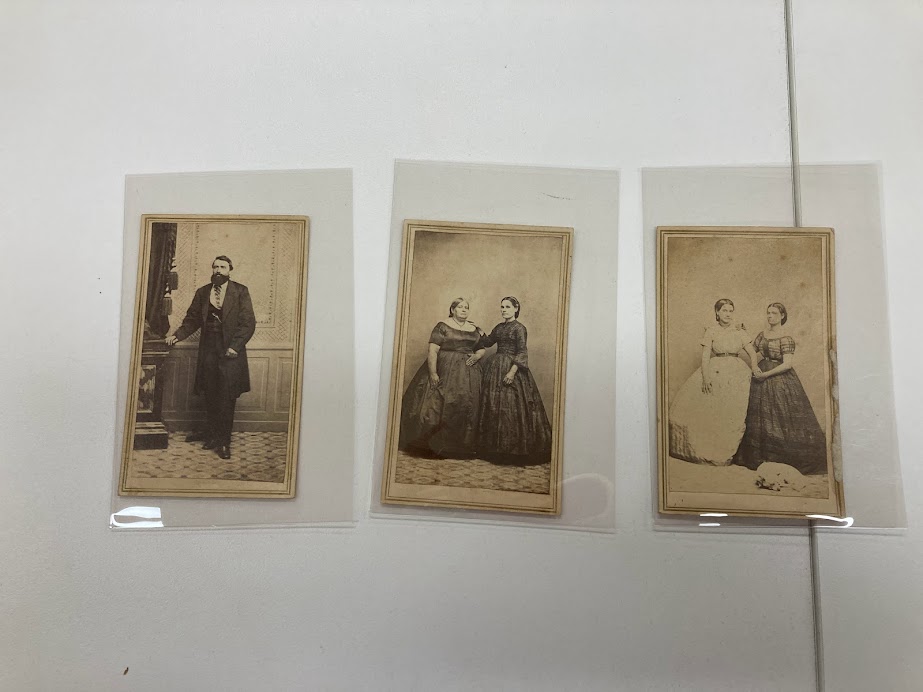
Penelon Studio Photos. Henri Penelon, ca 1860's
Unknown phtographer (Portraits of early California residents, UCLA Library Special Collections, Charles E. Young Research Library)
Who are these people? We don't know their names, but what do these portraits reveal about what they might have been like? These photographs were taken by Henri Penelon (1825-1874), who emigrated to Los Angeles from France in 1853. He was also a painter, but Penelon made a living from photos like these, of people whose names have, for the most part, been lost to history...