LAYERED LANDS
Introduction
This exhibit is a Los Angeles story, but "California is many stories," as Deborah Miranda (Ohlone- Costanoan Esselen) writes in Bad Indians. That's a deceptively simple statement, though. Miranda isn't interested in "diversity" or "inclusion," and neither are we. Here we try to capture the networked layers of story that comprise our city, to give a sense of the land's movement through various colonial and national frames, but this is not a history of Los Angeles. "History" is a kind of story, usually crafted by victors, that makes certain assumptions about progress, about past, present, and future. "Time" itself is a story that explains the movement of matter and energy through space. "History" assumes that movement to be linear, but this exhibit asks you to imagine otherwise. What if that movement is cyclical? What if every moment that ever was or ever will be is always already here? What if the colonial and national frames that have shaped Los Angeles are just folds in the cloth of time, layers to be unfolded and folded again? What if the only constant is the land, and the most important thing is to steward it with reverence and respect? What if the land itself is a story that does not require human tellers? "Story," writes Miranda, "is constantly moving. It is a river where no gallon of water is the same gallon it was one second ago. Yet it is still the same river. It exists as a truth. As a whole. Even if the whole is in constant change." We take up our story in this spirit of constant change co-existing with eternal truth, nations as folds in the indigenous currents animating this land. We present three significant Los Angeles moments: when it was ruled by Spain, governed by Mexico, and as it transitioned to US rule. We represent these moments primarily with material from the collections of UCLA and the Los Angeles Public Library, two public institutions with a shared mission of collecting and preserving the city's cultural heritage and making it accessible to all. This kind of public access will help us see beyond the national and colonial limits of history and empower us as future stewards of time, space, and story.
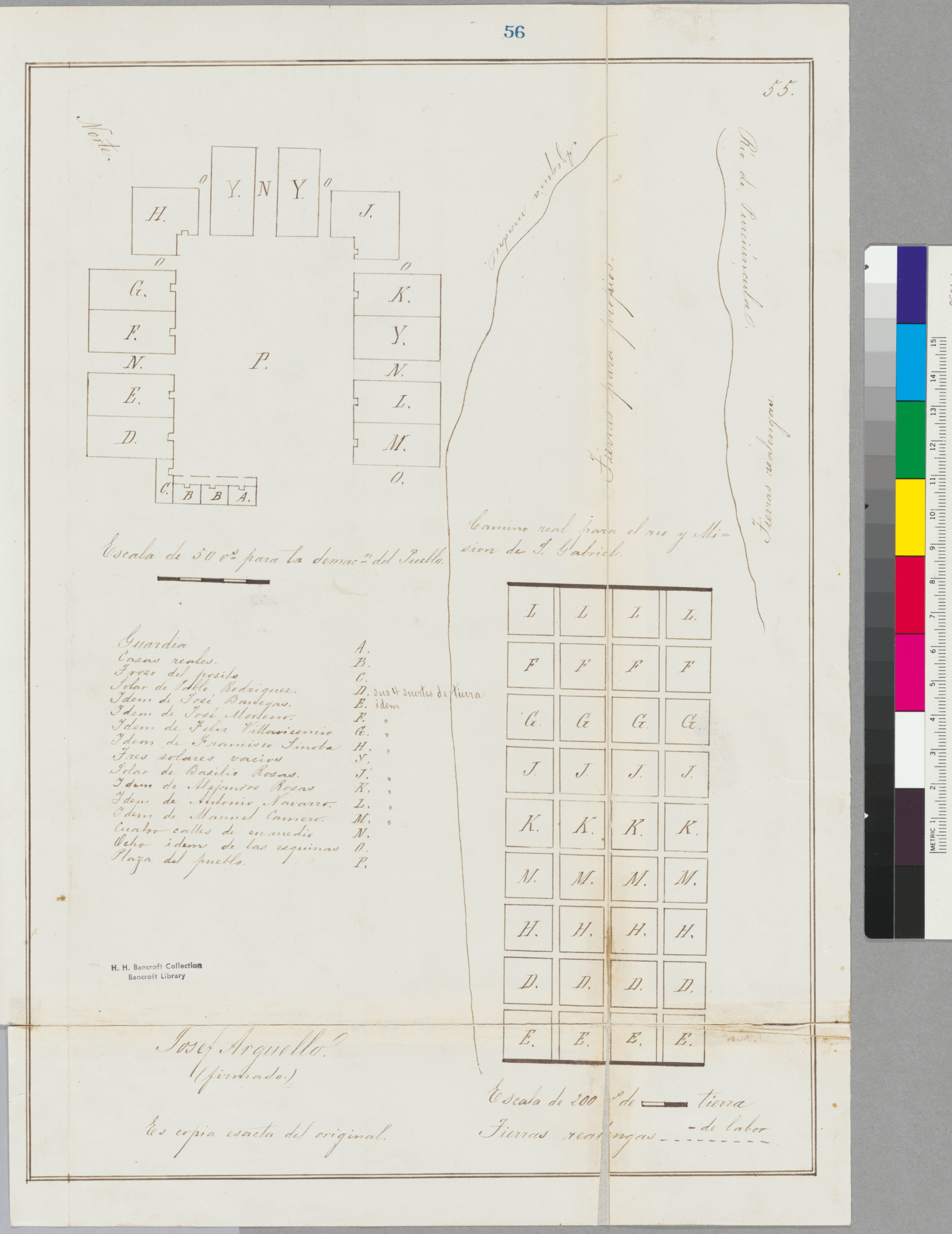
Spanish
Spain's colonial imprint on California's history is profound, characterized by a disregard for the indigenous population's rights and well-being. In the 18th century Spanish explorers like Juan Rodriguez Cabrillo first ventured along the California coast. By the 18th century, Spanish expeditions such as that headed by Gaspar de Portola in 1769 led to the establishment of missions, including San Diego and San Francisco, initiating Spanish settlement of the region. Franciscan friars played a pivotal role in this process at the missions, subjecting indigenous communities to violent cultural suppression and exploitation. Spain's presence persisted through the 19th century, deeply influencing California's cultural, architectural, and agricultural landscape.
Section 1
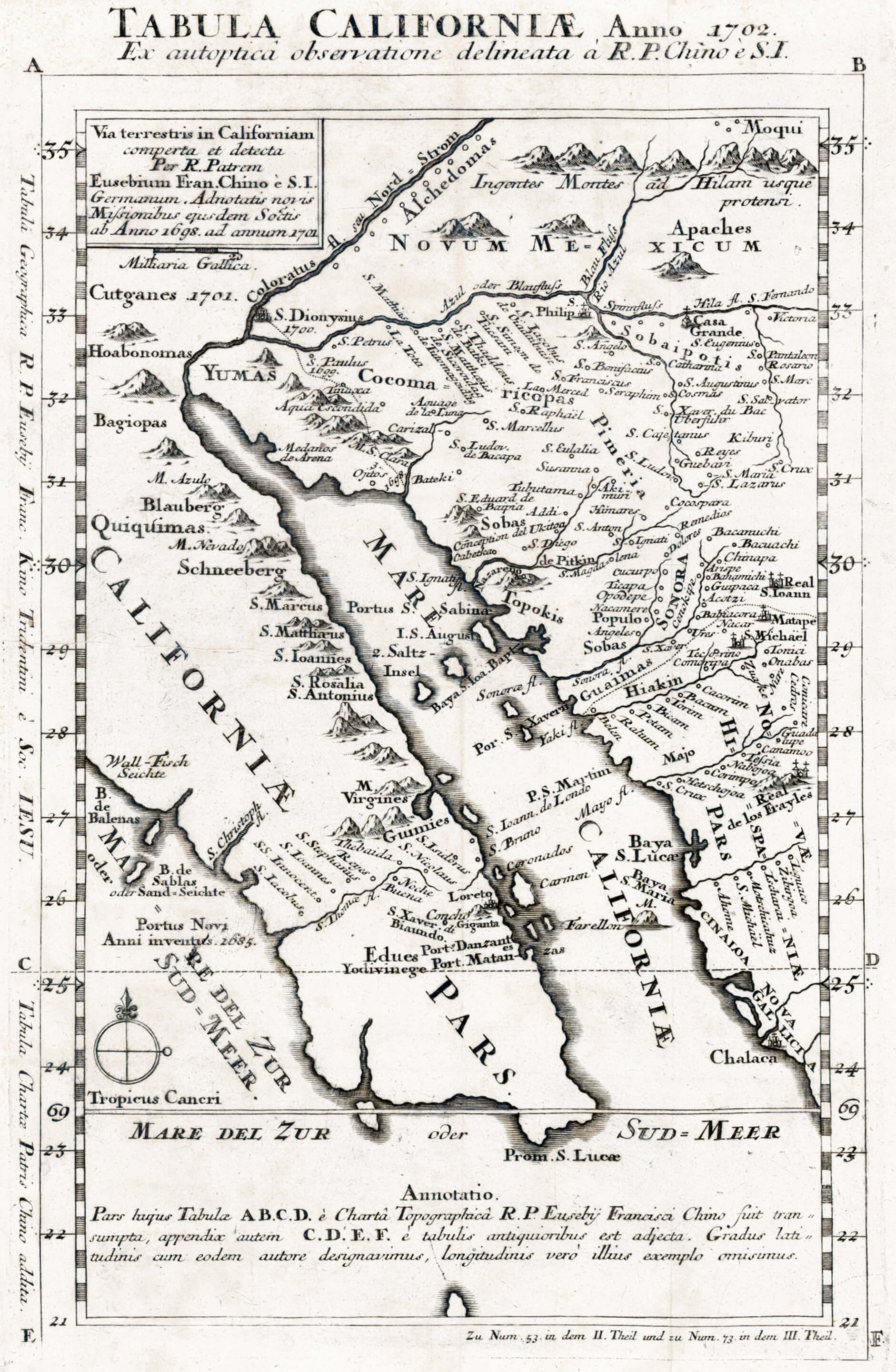
Tabula Californiae, anno 1702
Kind's map shows California as connected to North America, ending the...
Read More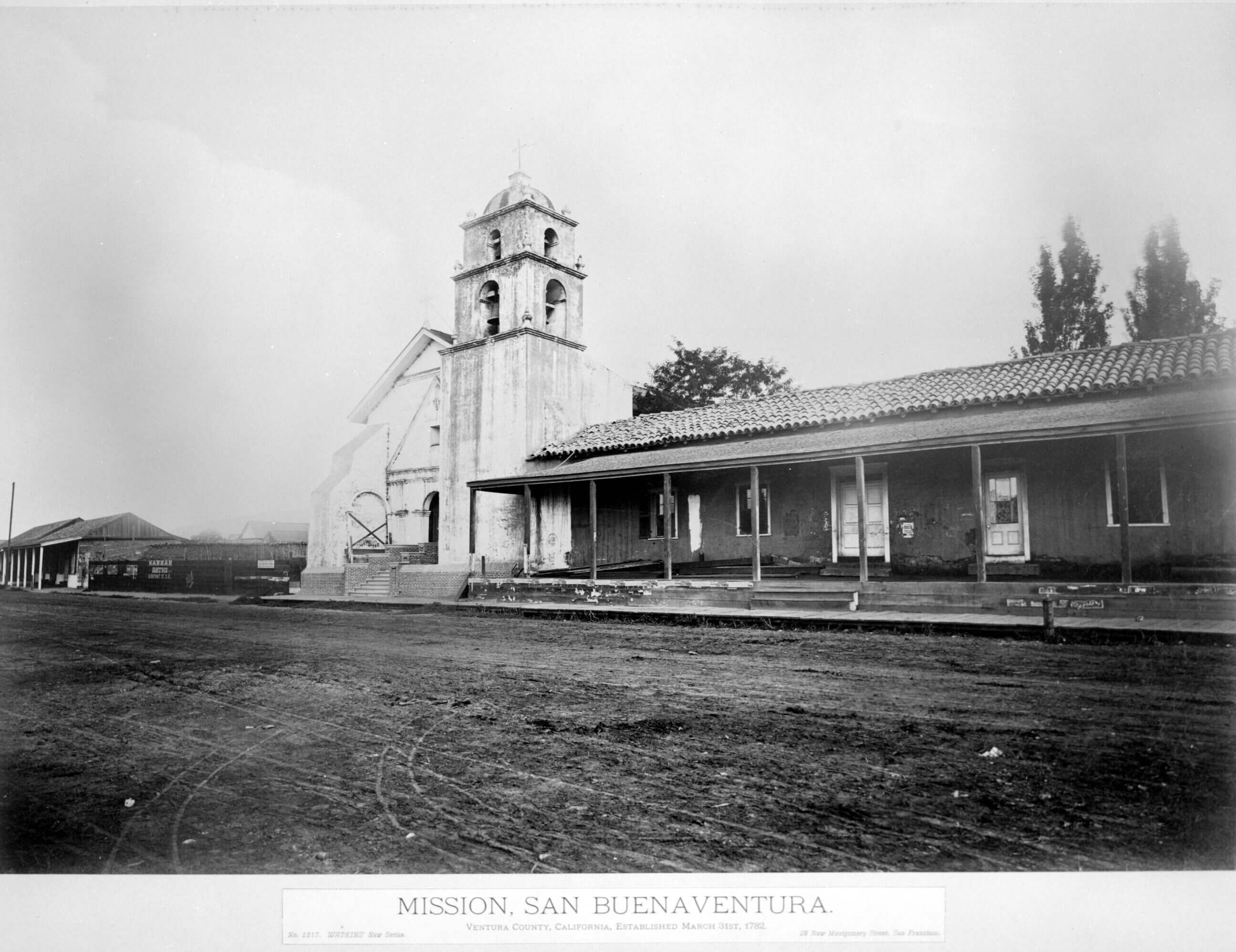
Mission San Buenaventura no. 1217
"Composition" refers to how things are arranged in a work of art. Here, Watkins plays with...
Read More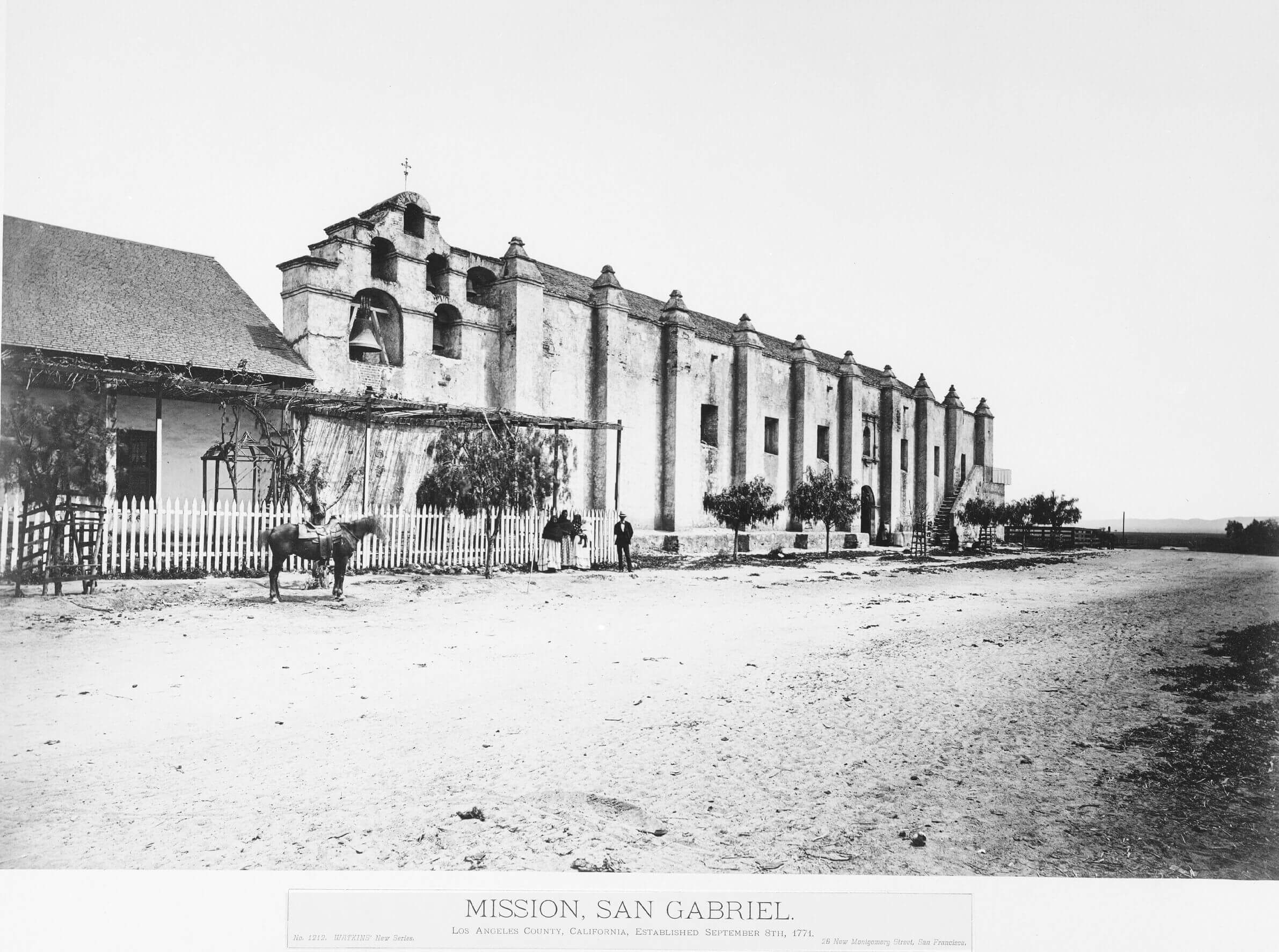
Mission San Gabriel no. 1212
What do you notice first in this photo? What else do you see when you look for pyramidal...
Read MoreWall Sections

Mexican
In the aftermath of Mexico's independence from Spain in 1810, California became a Mexican territory. Mexico's governance of California, lasting from 1821 to 1846, was a transformative period defined by the dissolution of the missions, the retention of indigenous labor, and the increased establishment of ranchos, extensive land grants that shaped the region's agricultural landscape. The challenges faced by the Mexican government in managing the vast and sparsely populated territory only increased after Mexico's 1824 constitution kept California as a protected territory rather than granting it state status. This decision exacerbated internal tensions among californios – elite, white-identified Mexican Californians – and made it possible for British, French, and US settlers to establish an economic and political foothold in the area.
Section 1
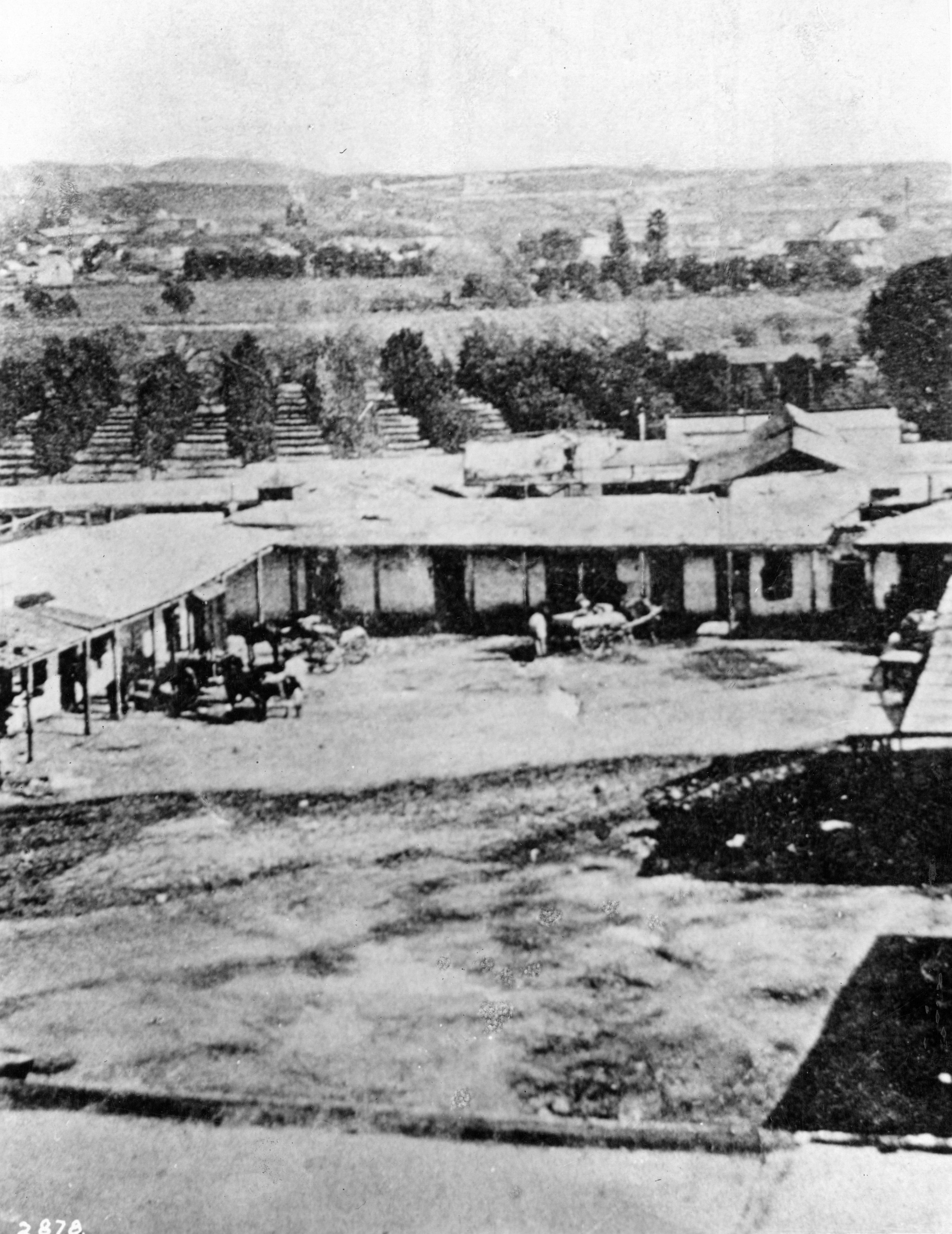
Abel Stearns Adobe and Orchard. unknown photographer, 1875
Abel Stearns built this house, "El Palacio," at a ...
Read More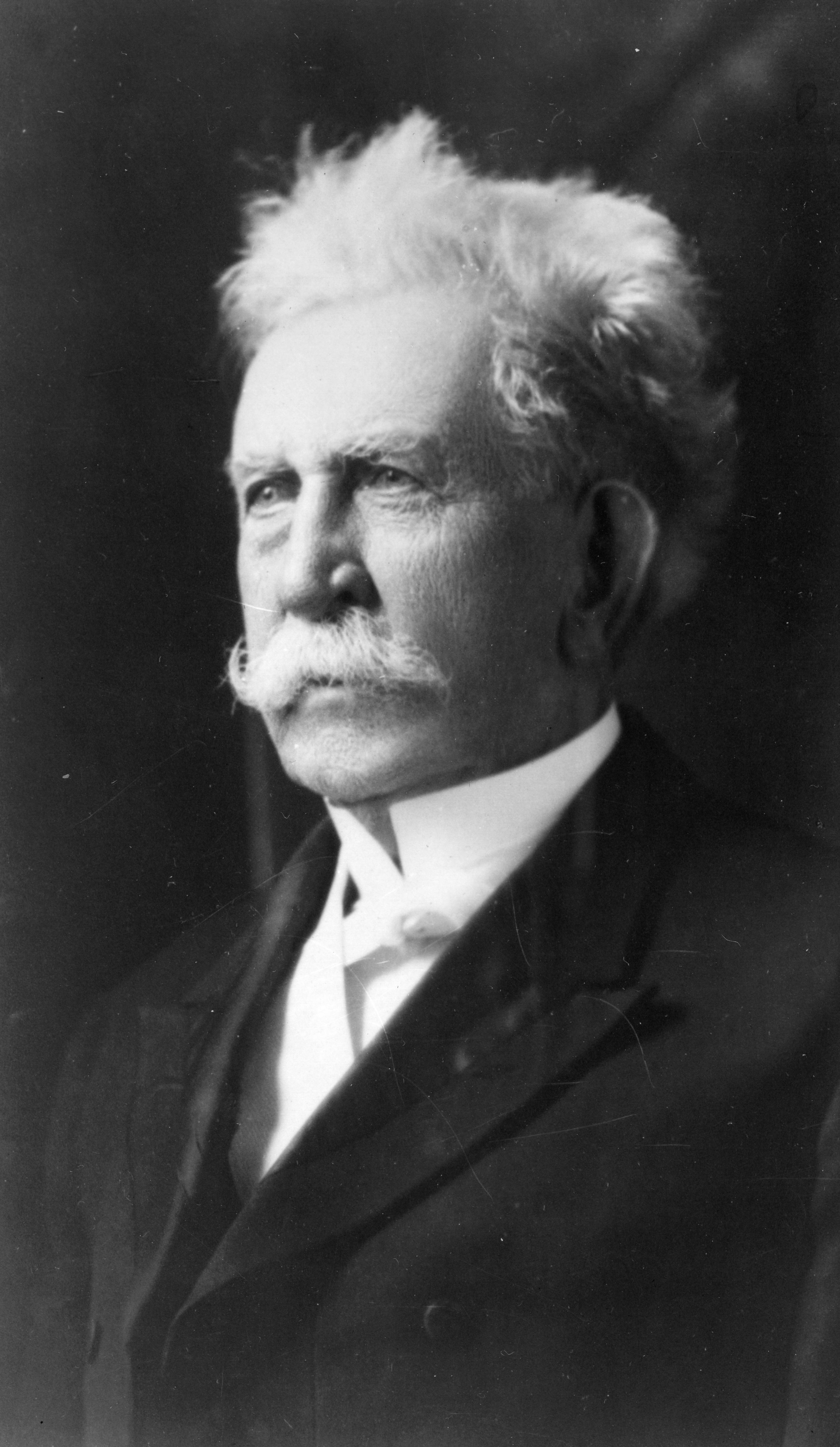
Horace Bell. unknown photographer, n.d.
Horace Bell (1830-1918) was a Los Angeles Ranger (precursor to the Sheriff's department), a mercenary ...
Read More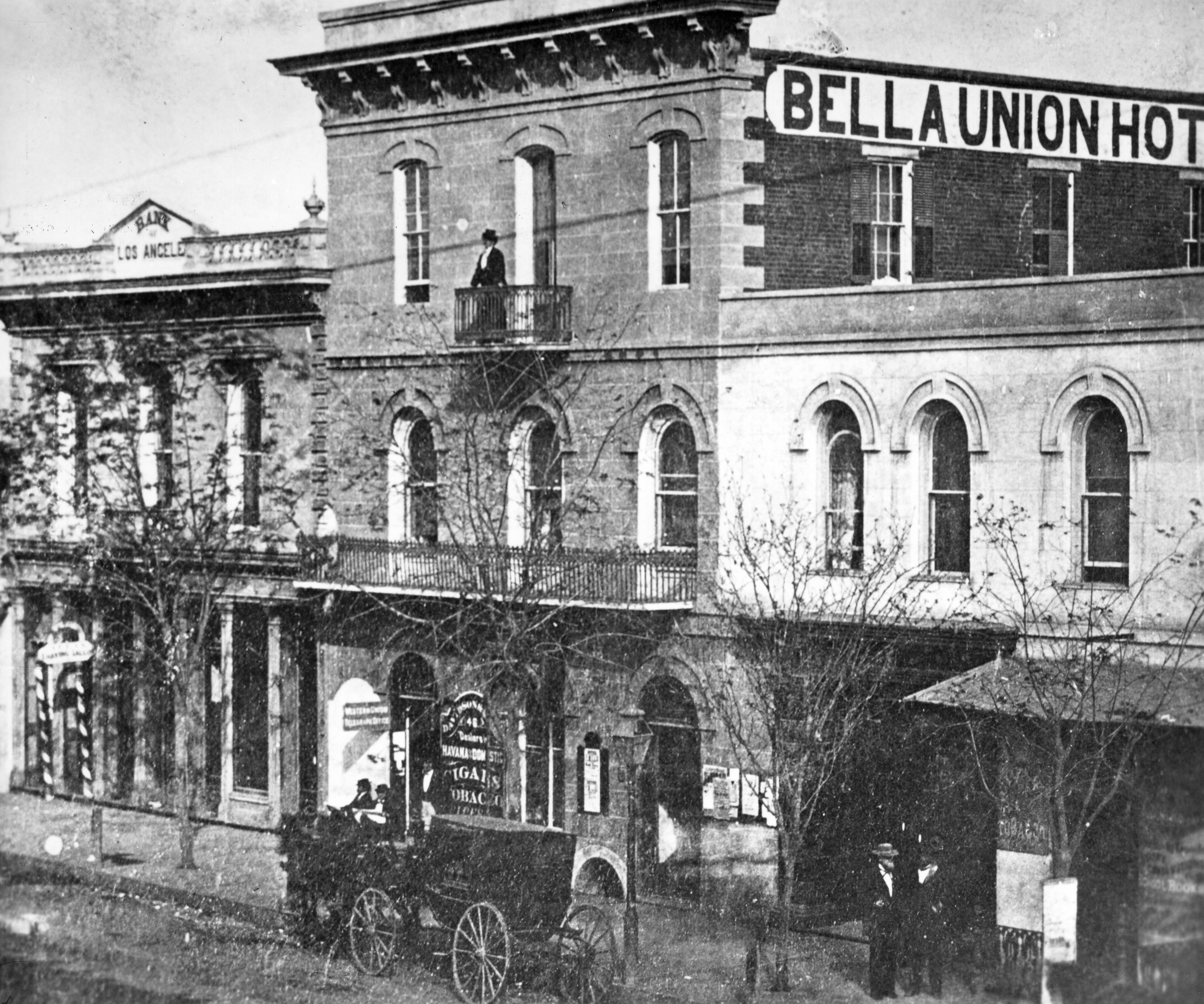
Bella Union Hotel. unknown photographer, 1876
The Bella Union Hotel, located on Main St. between Temple and Aliso, was one of the most important ...
Read More